Blackout Poetry
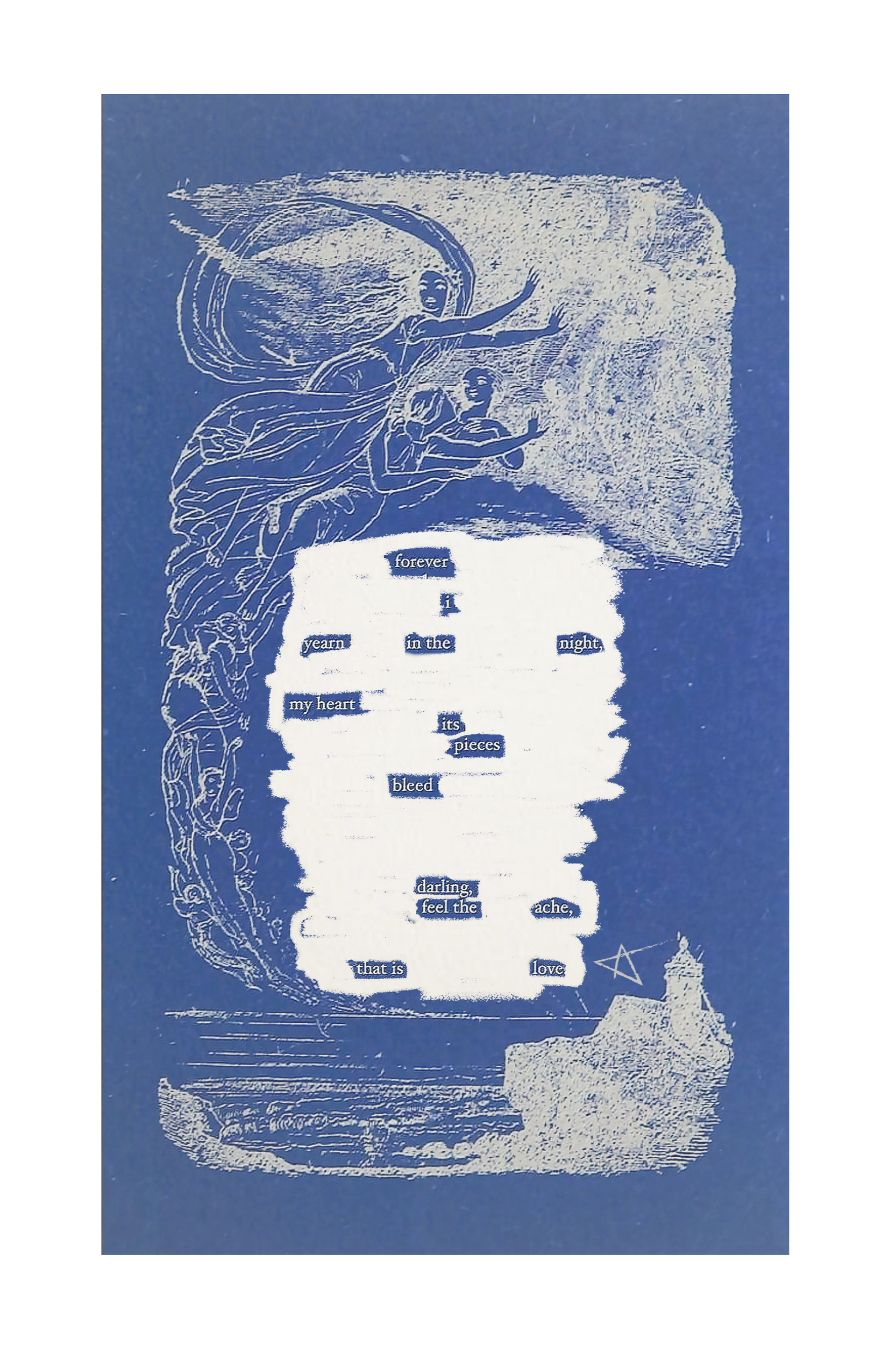
“In the Night”
Illustration by John Tenniel, 1848, for Charles Dickens's The Haunted Man and the Ghost's Bargain, titled "The Gift Reversed."
Original poet unknown.
Blackout poem reads:
forever
i yearn in the night,
my heart
its pieces bleed
darling,
feel the ache,
that is love.
"Creativity springs from the yearning to be the fullness of who you are." Ram Dass
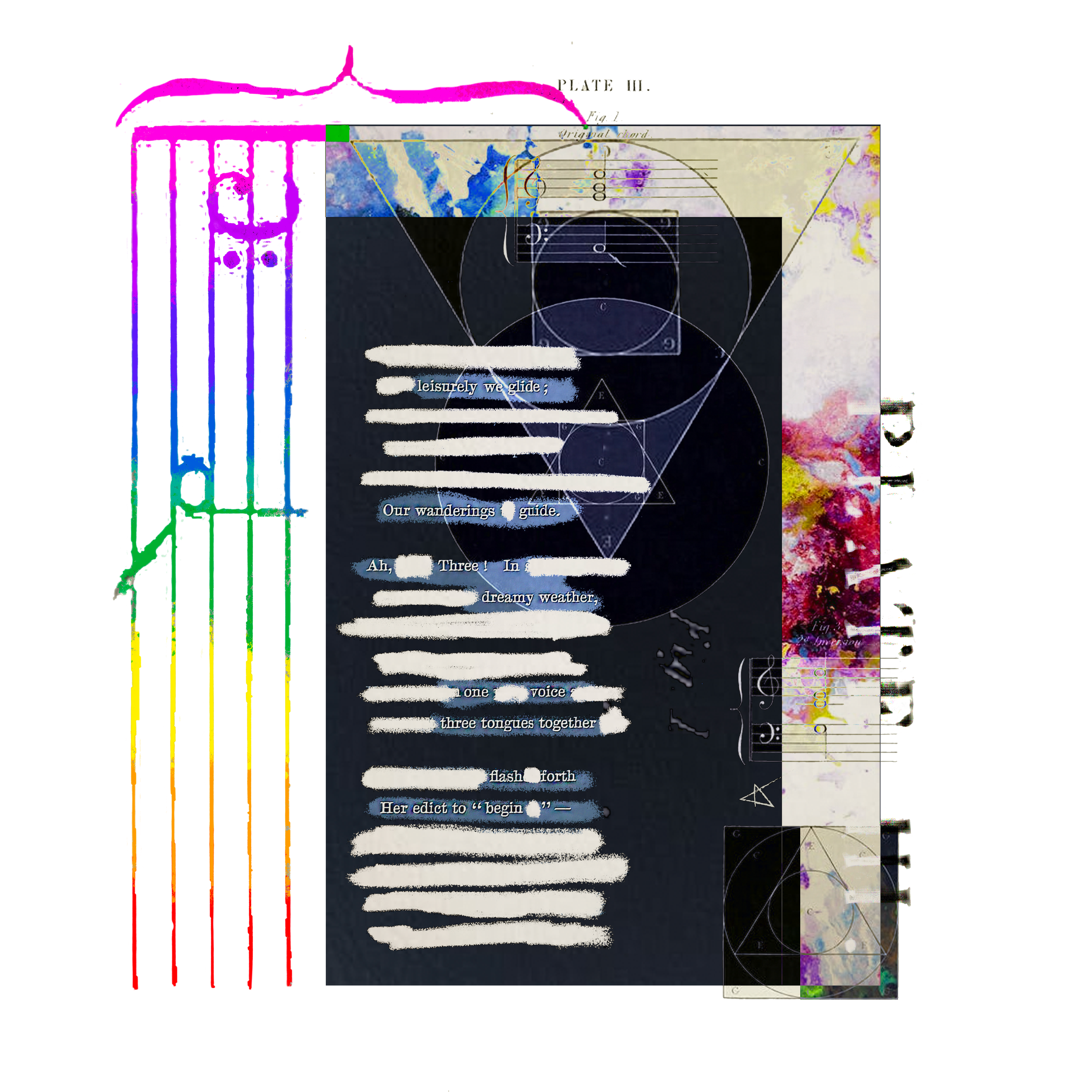
“Wonderland”
Superimposed image by musician/artist David Ramsay Hay, titled “Circle, Triangle, and Square: Tonic, Mediant, and Dominant” from The Natural Principles and Analogy of the Harmony of Form, 1842.
Blackout poem from “Alice's Adventures in Wonderland,” by Charles Lutwidge Dodgson under the pseudonym, “Lewis Carroll” in 1865.
Little known fact about Charles was his pedophilic propensities, due to his family carefully maintaining his public appearance and hiding evidence.
Blackout poem reads:
leisurely we glide;
Our wanderings guide.
Ah, Three!
In dreamy weather,
one voice
three tongues together
flash forth
Her edict to “begin” —
Sṛṣṭikālī
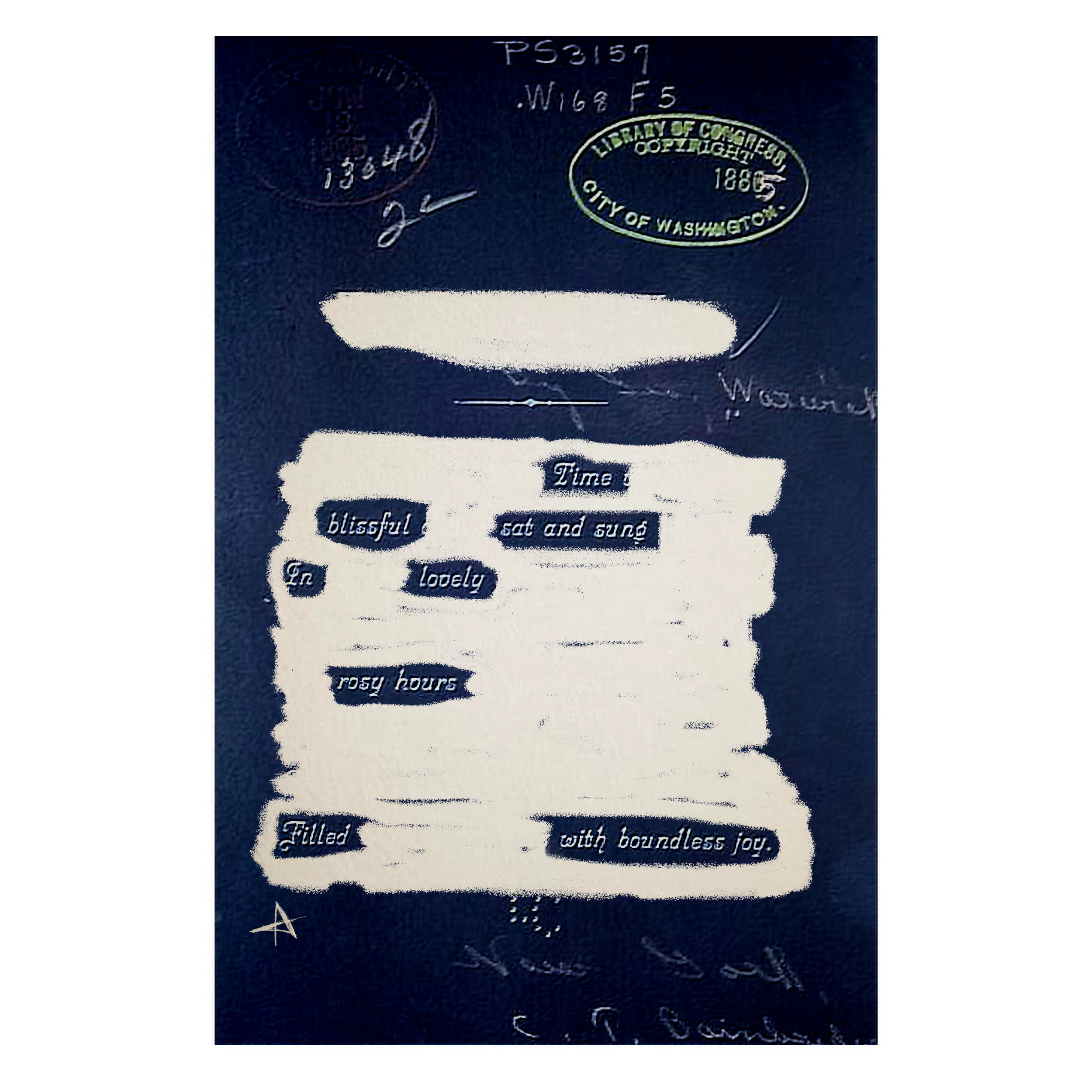
“Time’s Song”
Original poem by George Warwick, “The First New Year,” 1885. According to the Public Domain Review, this victorian-era poem is a “short little poem meditating on the inevitable end of all things and the power of new beginnings.”
Blackout poem reads:
Time
blissful
sat and sung
In lovely rosy hours
Filled with boundless joy.
Raktākālī
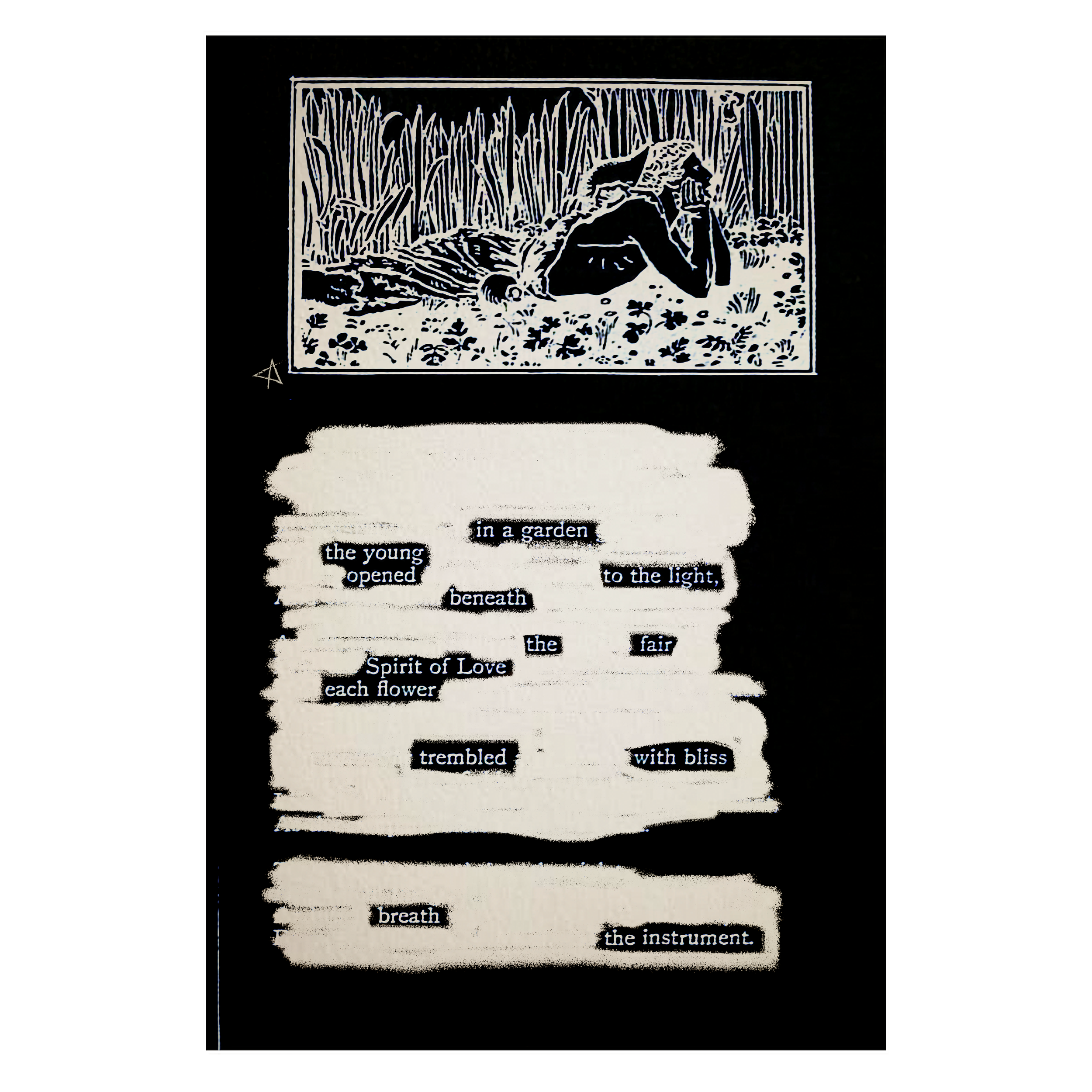
“In a Garden”
Illustration by Robert Anning Bell for the original poem titled, “The Sensitive Plant” by Percy Bysshe Shelley (1902), exploring themes of grief, the fragility of life, and the immortality of beauty in nature.
Blackout poem reads:
in a garden
the young opened
to the light, beneath the fair
Spirit of Love
each flower trembled with bliss
breath
the instrument.
Sthitināśakālī
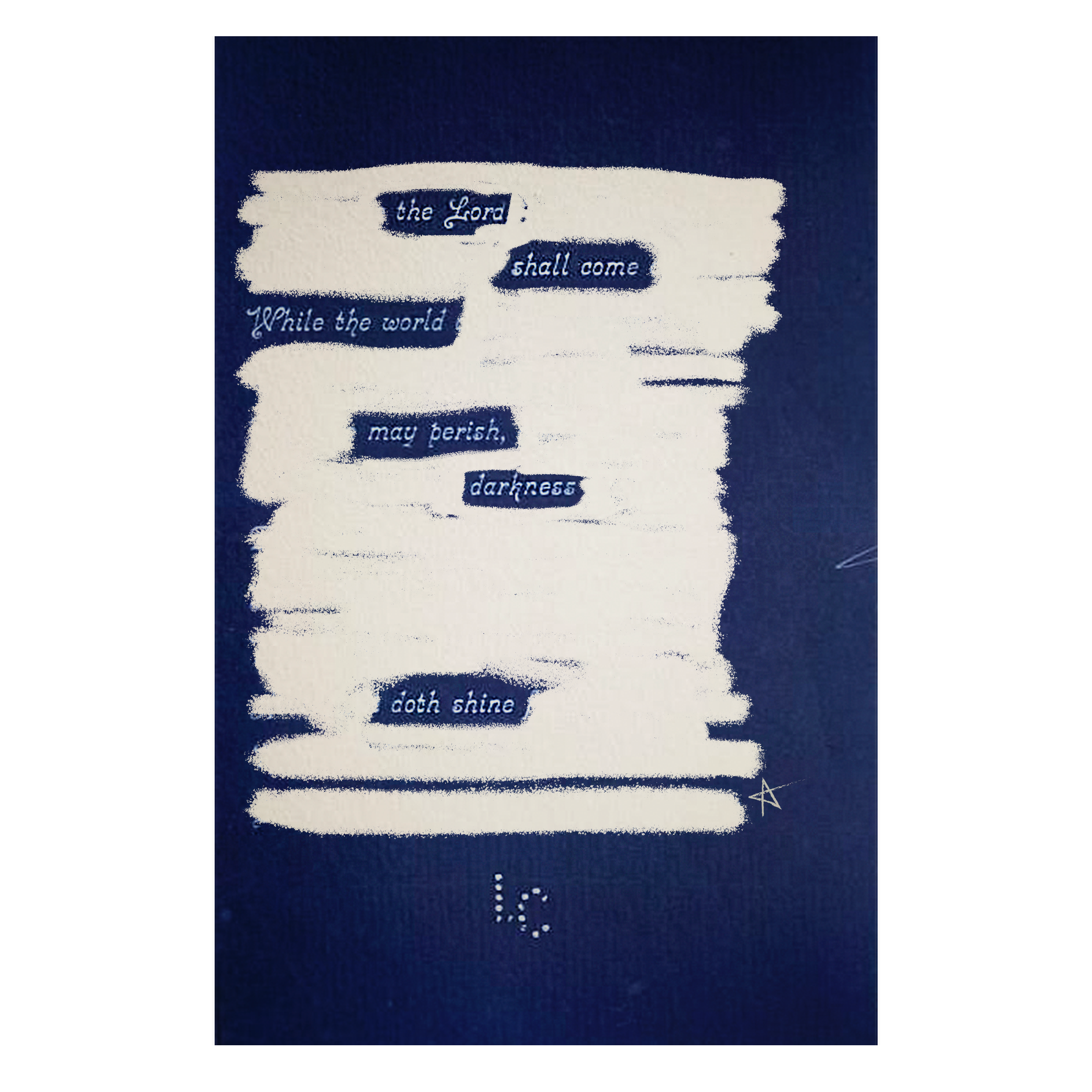
“Darkness Doth Shine”
Original poem by George Warwick, “The First New Year,” 1885.
Blackout poem reads:
the Lord shall come
While the world may perish,
darkness doth shine
Yamakālī
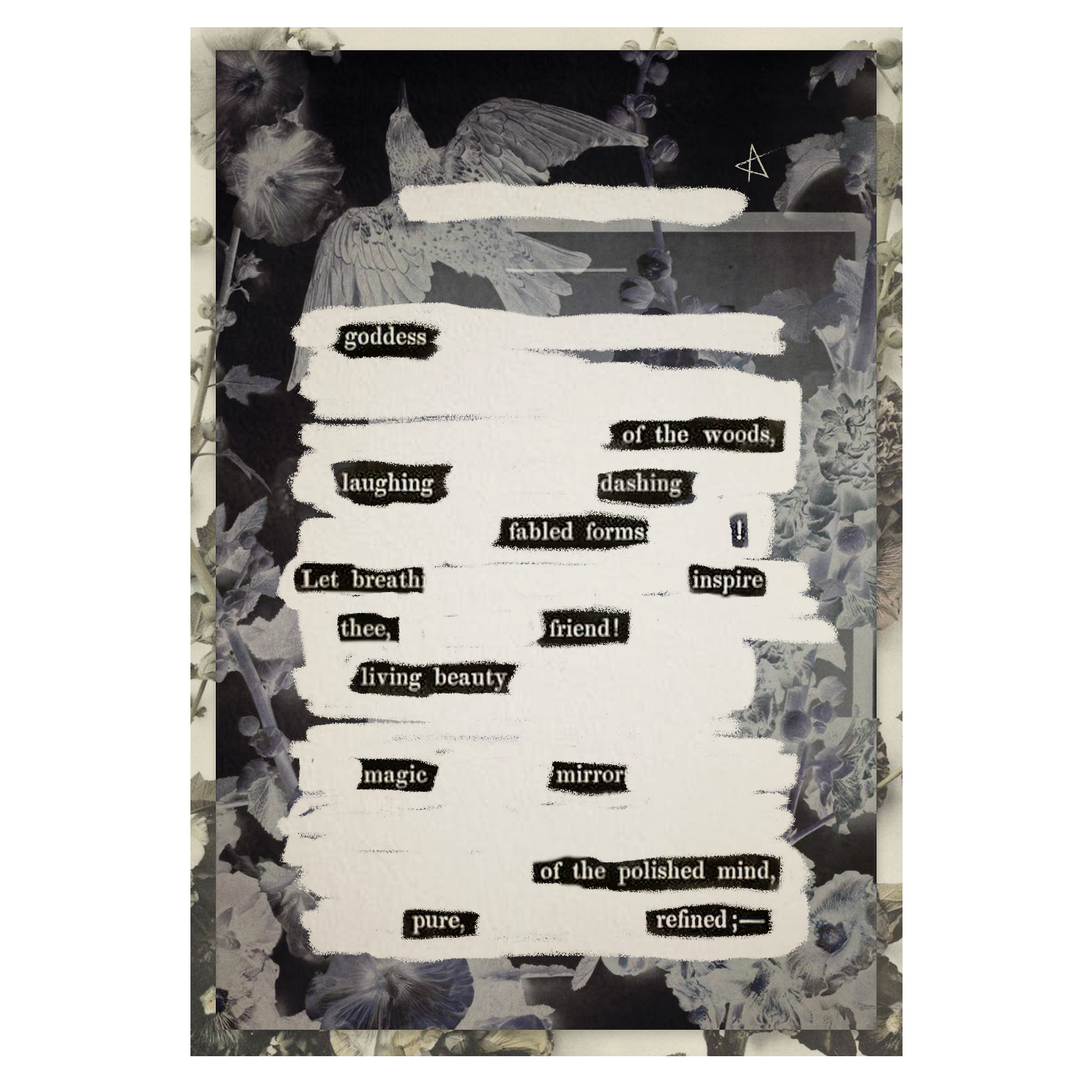
“Magic Mirror”
Original poem by Solyman Brown, Dentologia: A Poem on the Diseases of the Teeth and Their Proper Remedies, 1833, which treats dental health as a reflection of physical, moral, and "angelic" (or spiritual) purity and seeks to elevate dentistry from a “humble craft” to a respectable medical profession, which it successfully did.
Original image by engraver/photographer Martin Gerlach, from Festons und Decorative Gruppen aus Pflanzen und Thieren, 1897.
Blackout poem reads:
goddess of the woods,
laughing
dashing fabled forms!
Let breath inspire thee, friend!
living beauty
magic mirror
of the polished mind,
pure, refined; —
Saṃhārakālī
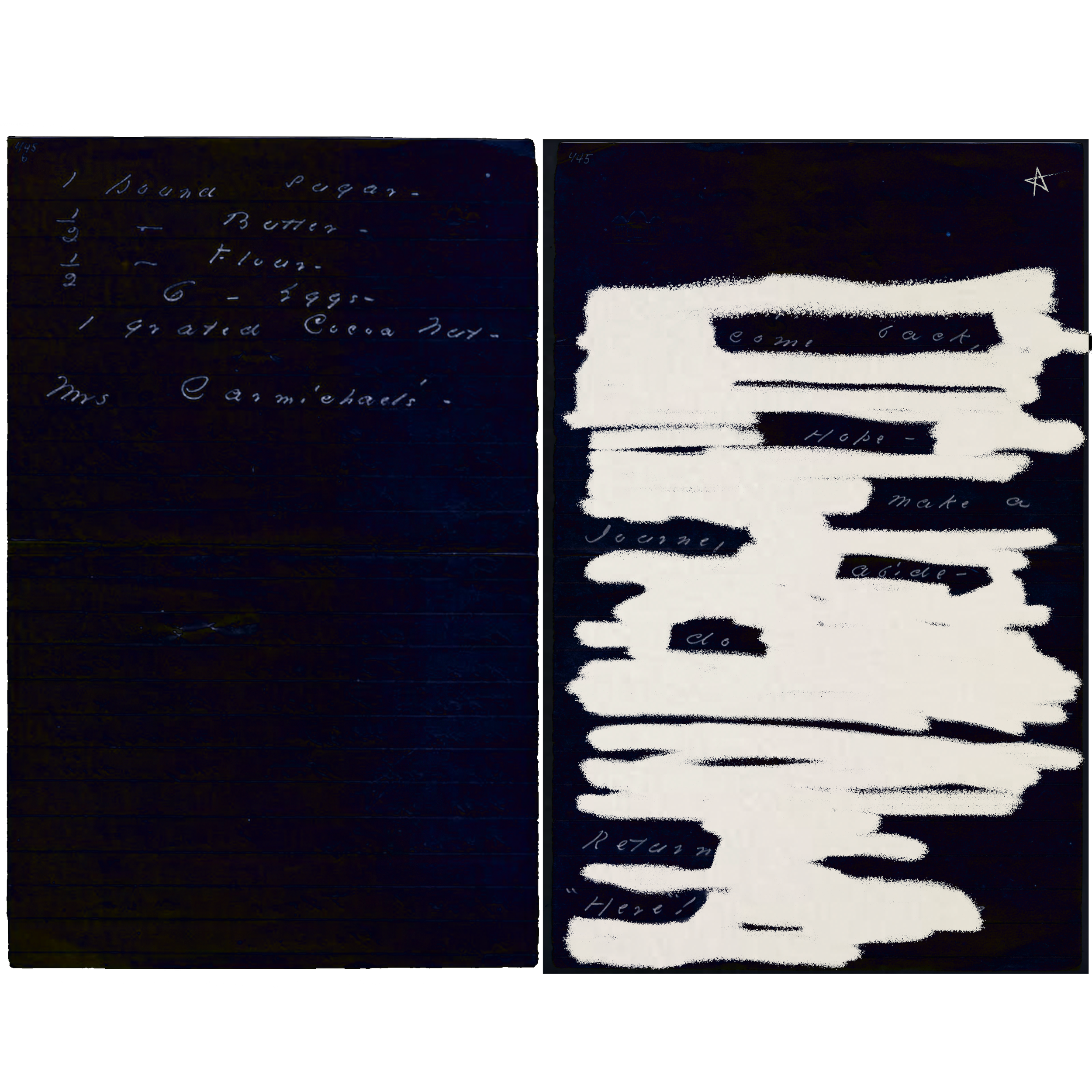
“Come Back, Hope”
Original poem by Emily Dickinson, Amherst Manuscript #445, written on the back of a recipe.
Blackout poem reads:
Come back, Hope -
make a Journey
abide -
do Return “Here!”
Mṛtyukālī
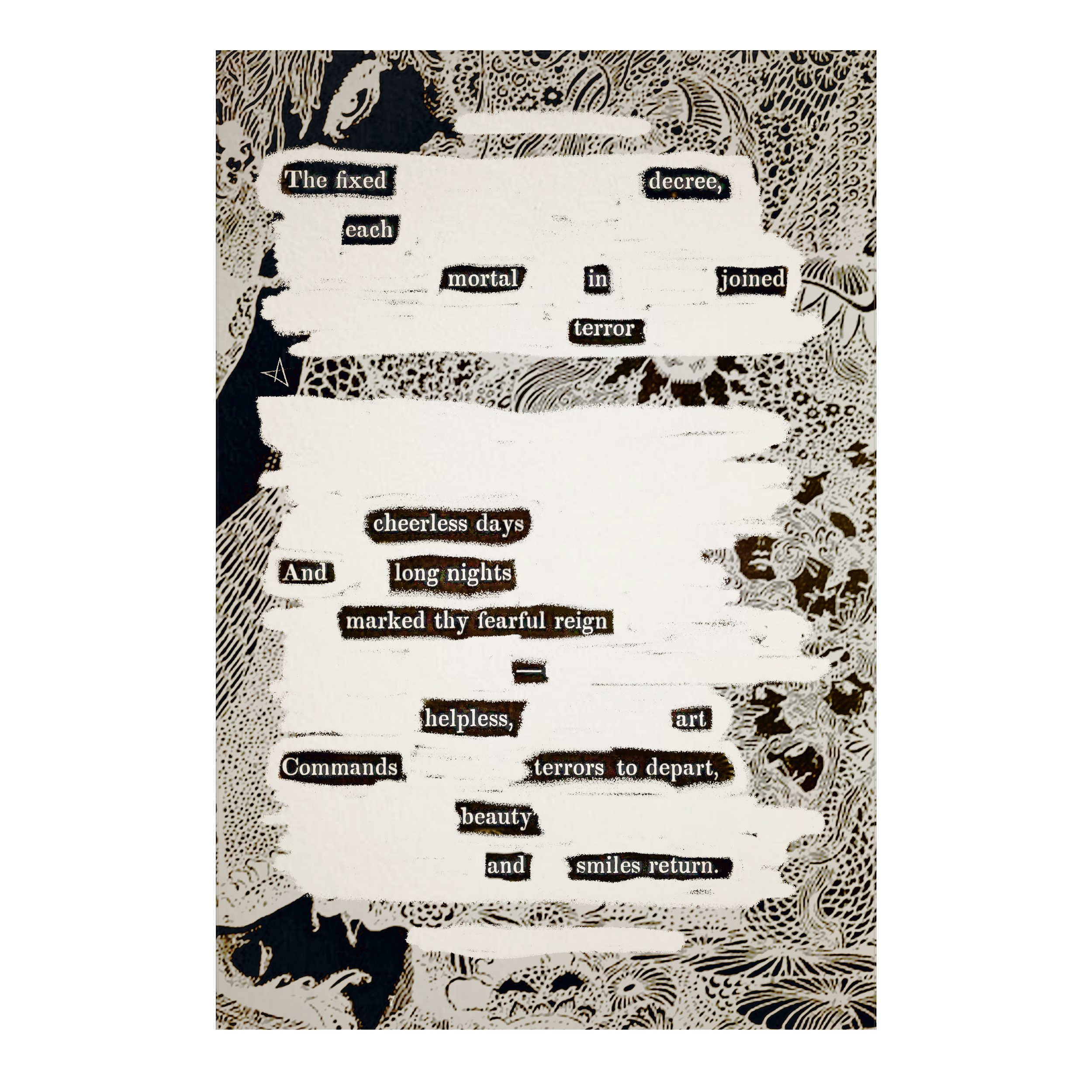
“The Earth Grew Dark”
Illustration by Harry Clarke for the 1919 edition of Edgar Allan Poe's Tales of Mystery and Imagination, titled "The Earth grew dark, and its figures passed by me, like flitting shadows, and among them all I beheld only—Morella."
The illustration used is one of twenty-four monochrome images Clarke made for this edition, named after a quote from the final paragraph of Edgar Allan Poe's 1835 short story, "Morella," describing the narrator's overwhelming and maddening obsession with his deceased wife, whose presence and memory haunts him and completely consumes his reality, even after death.
Original poem by Solyman Brown, Dentologia, 1833.
"The Earth Grew Dark” serves as a commentary on the liberating and transformative power of art, illustrating how creative expression can dispel one's inner misery.
Blackout poem reads:
cheerless days
And long nights
marked thy fearful reign —
helpless, art
Commands terrors to depart,
beauty and smiles return.
Rudrakālī
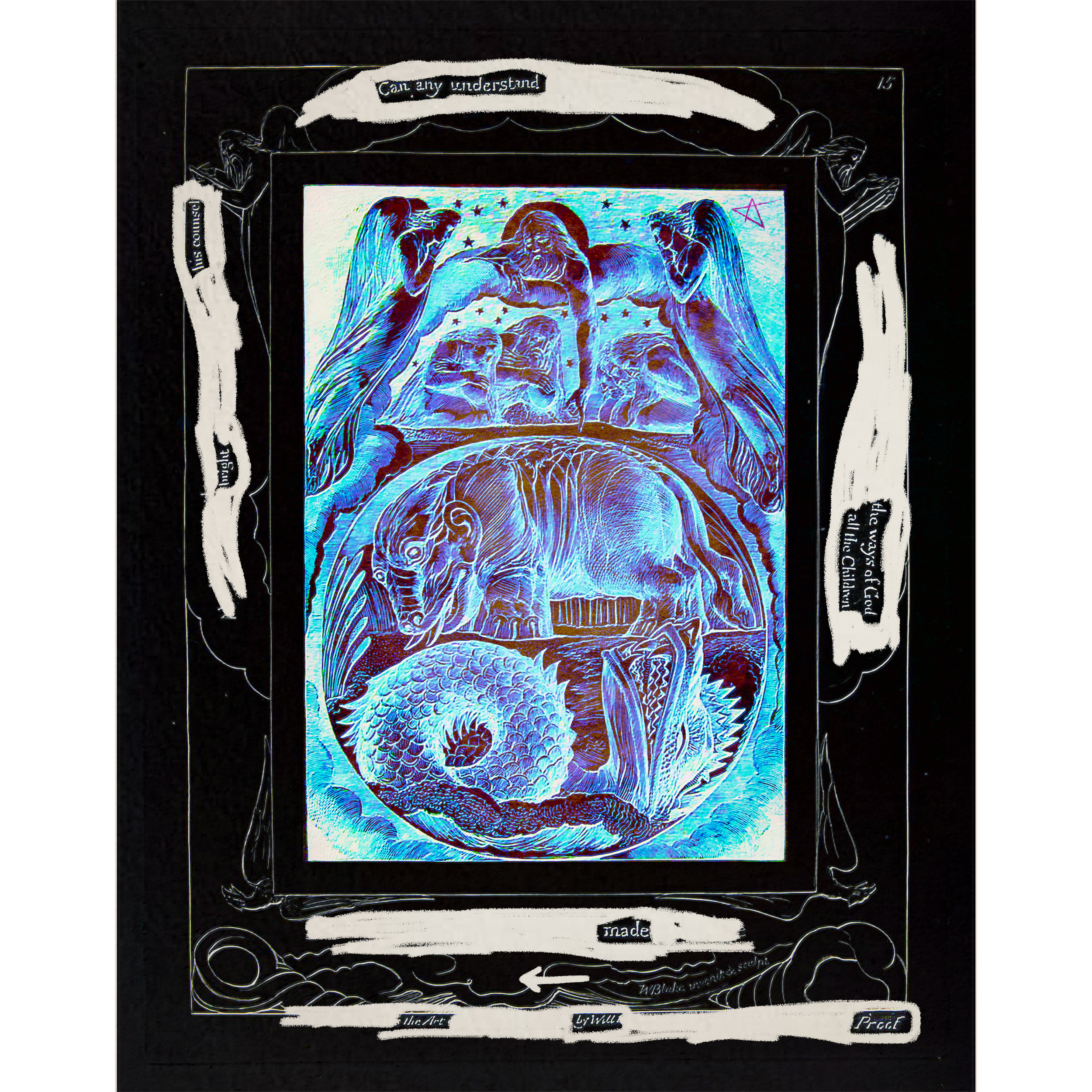
“The Ways of God”
An experimental poem created from a page of Illustrations of the Book of Job, Behemoth and Leviathan, by William Blake, 1825-26.
Blackout poem reads:
Can any understand
the ways of God
all the children
made bright
his counsel
-
the Art
by Will
Proof
Mārtaṇḍakālī
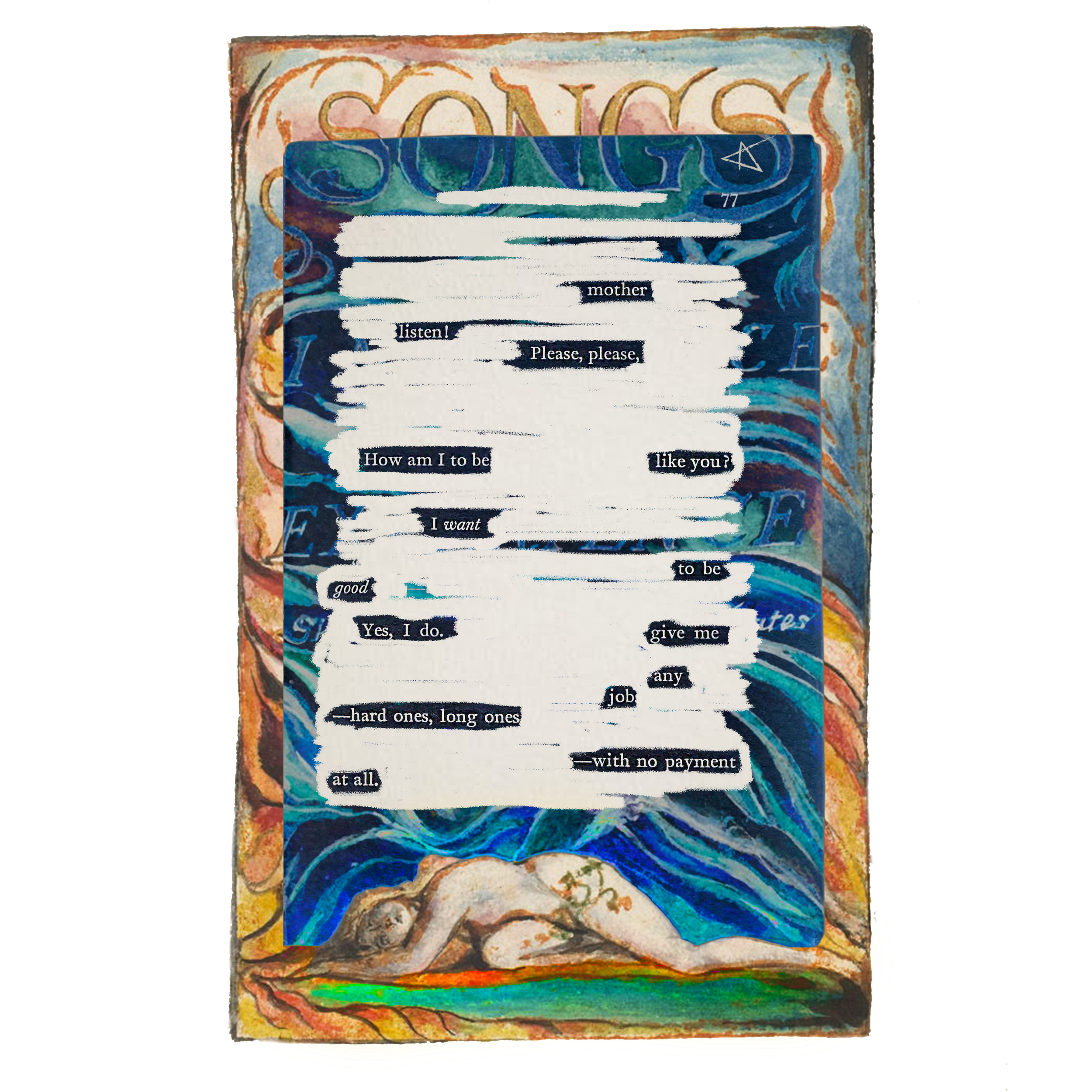
“Songs of Innocence
and of Experience”
Blackout poem created from the short story, "Tom the Scout-Cub," from Tales at Bedtime by Enid Blyton (1961).
Original artwork from the title page of Songs of Innocence and of Experience, illustrated by William Blake, 1825.
Blackout poem reads:
mother
listen!
Please, please,
How am I to be like you?
I want
to be good
Yes, I do.
give me any job—
hard ones, long ones—
with no payment at all.
Paramārkakālī
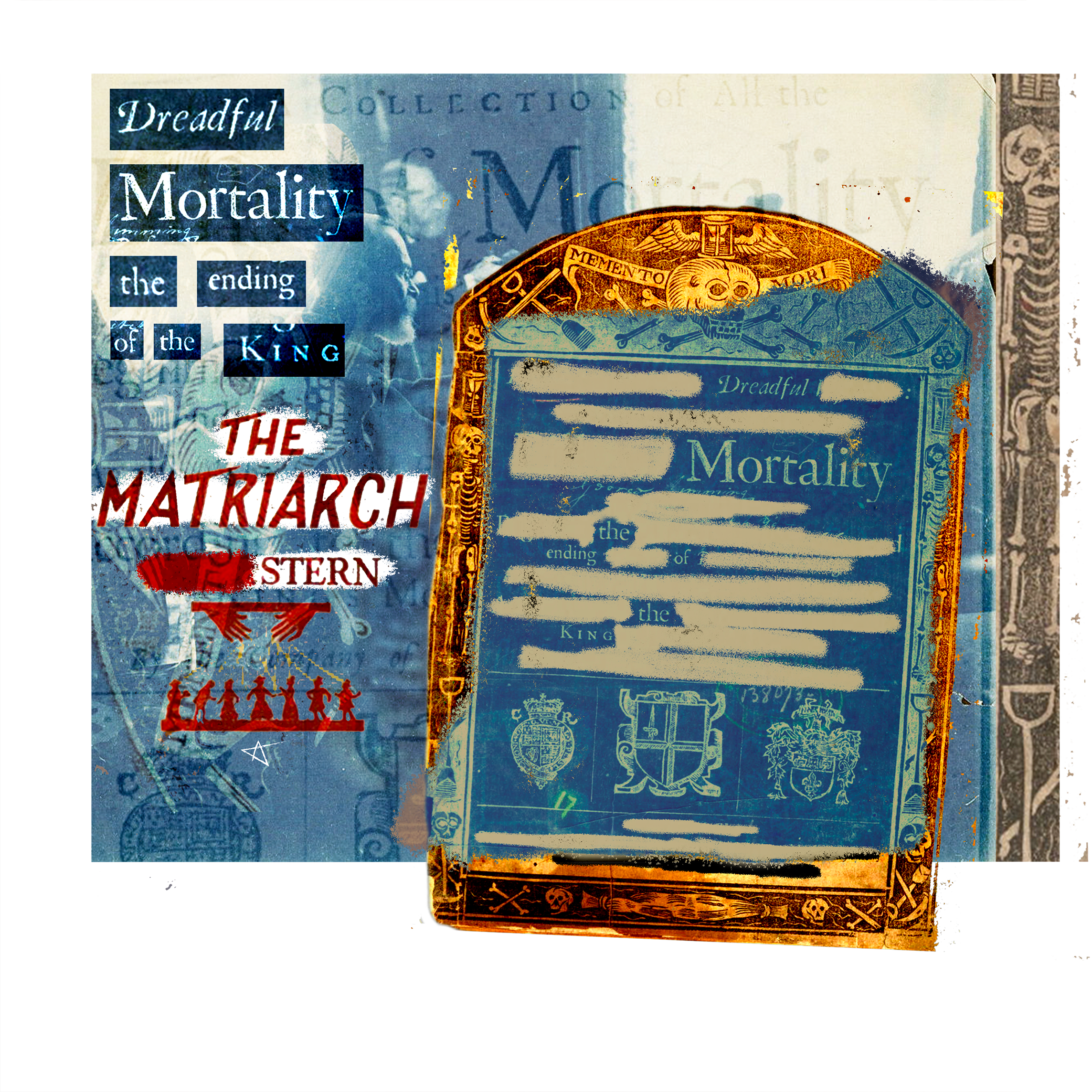
“Momento Mori:
The Ending of the King”
Multiple pieces were edited and used to create this blackout poem, including the book cover “The Matriarch” from the “Rakonitz Chronicles” by G.B. Stern (1924), and the title page to London's Dreadful Visitation published by Ellen Cotes, which was a collection of all the “bills of mortality” printed in London during the Great Plague of 1665, when a fourth of the population perished. The background photograph was taken in 1895 by artist Miss Carter, titled William James in a Séance with the Medium Mrs. Walden.
Blackout poem reads:
Dreadful Mortality
the ending of the KING
THE MATRIARCH
STERN
“Momento Mori: The Ending of a King” suggests that death is the ultimate equalizer; no matter how powerful a person may be, they will meet the same inevitable fate of all. The poem flips the common narrative of the cold, unforgiving, and impersonal nature of death itself, as something that can bring order and natural hierarchy back to an unbalanced society.
Kālāgnirudrakālī
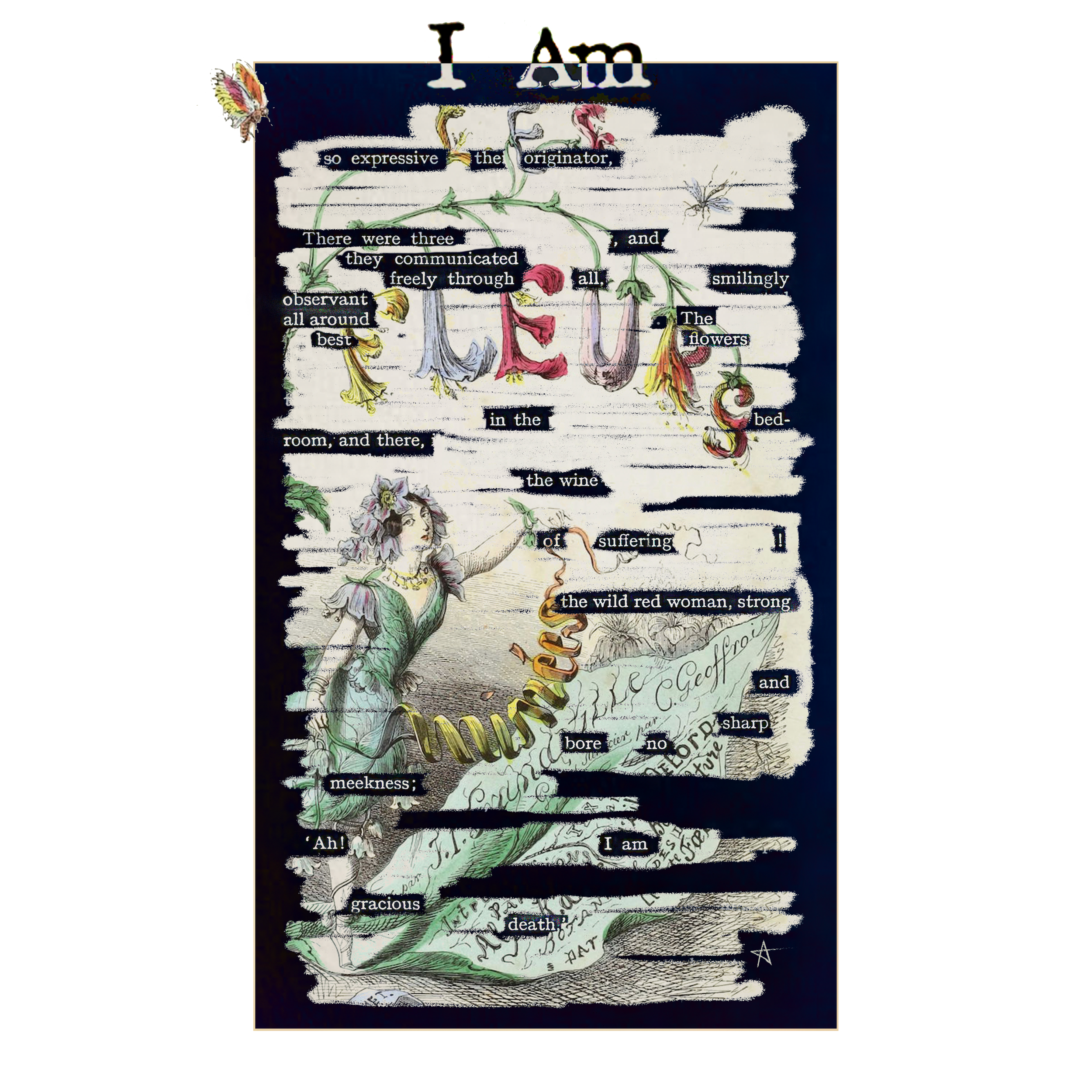
“I Am”
The Frontispiece to Volume I from The Flowers Personified by J. J. Grandville (1849) was used for the superimposed illustration. A Tale of Two Cities by Charles Dickens (1859) was used to create the poem.
Blackout poem reads:
so expressive
the originator,
There were three, and
they communicated freely through all,
smilingly observant
all around.
The best flowers in
the bedroom, and there,
the wine of suffering!
the wild red woman,
strong and sharp
bore no meekness;
‘Ah! I am
gracious death.’
Mahākālakālī
“TO THE LORD”
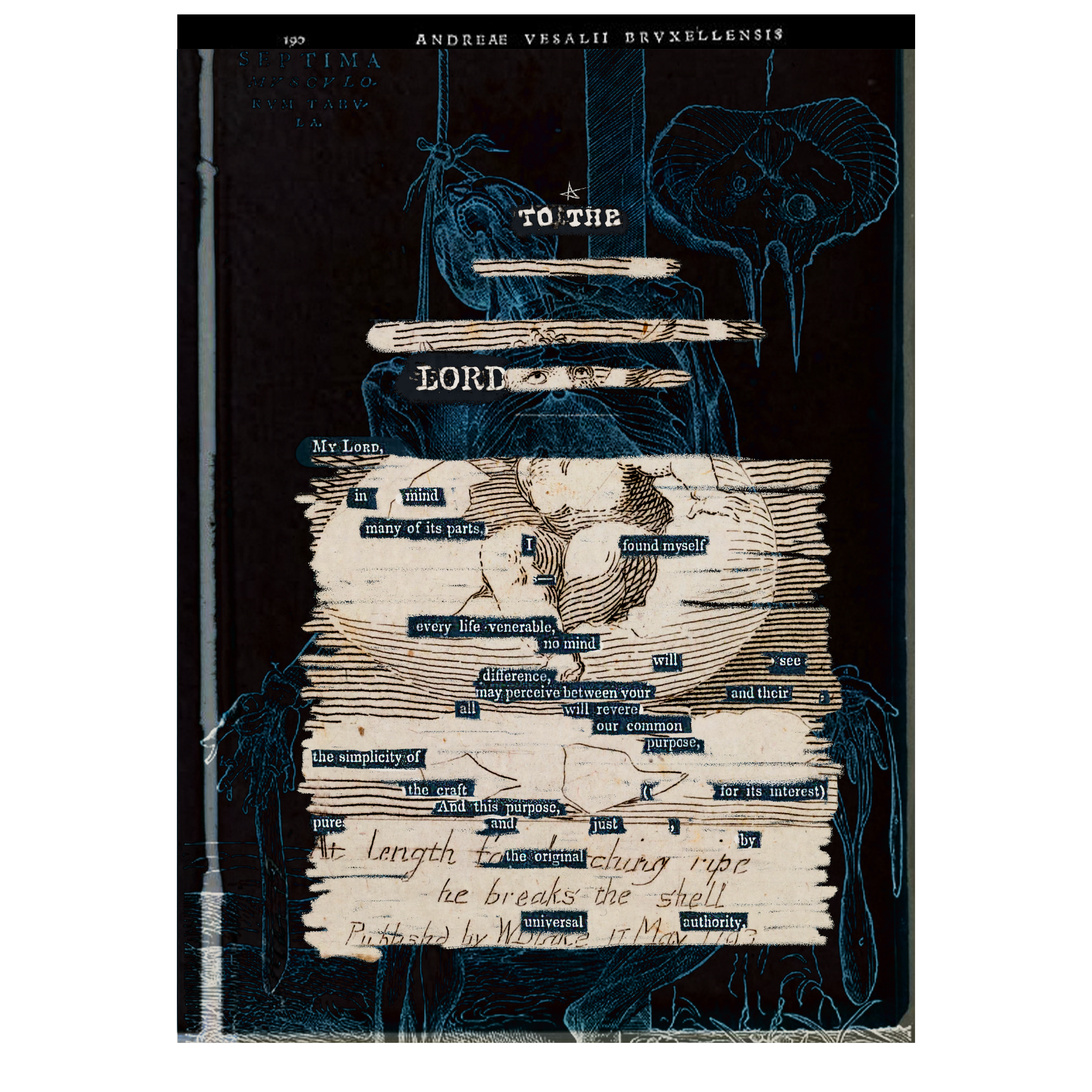
Separate illustrations were used while making this poem: "At Length for Hatching Ripe He Breaks the Shell" from Plate 8 of William Blake’s For Children: The Gates of Paradise (1793) and an anatomical illustration from De Humani Corporis Fabrica Libri Septem (Seven Books On the Fabric of the Human Body) by Andreas Vesalius, published in 1543. This book in particular (and its illustrations) transfigured the medical field, exploring and analyzing dissected human brains and nervous systems—considered unusual and grotesque but is now common-practice after having revolutionized modern medicine.
The poem was made using The Principles of Moral and Political Philosophy by William Paley, published in 1839.
Blackout poem reads:
My Lord,
in mind
many of its parts, I found
myself—
every life venerable,
no mind
will see difference, may perceive
between your and their,
all will revere our common purpose,
the simplicity of the craft (for its interest)
And this purpose, pure and just,
by the original
universal authority.
Mahābhairavacaṇḍograghorakālī
Isn’t it beautiful,
that everything must end?
“Art is a protest against death.”
Audrey Flack
“Art is the soul’s rebellion against reality.”
Oscar Wilde
“Nothing is absolute. Everything changes, everything moves, everything revolves, everything flies and goes away.”
Frida Kahlo